
Whats the news in the neighbourhood?
Transportation Needed/Required
Reliable ride to wherever!! Going price from local taxistas!
Carlos Perez Ricardo Perez
Whats app # 9991524931 Whats app # 9993548452
Email:
carlosperez250579@hotmail.com repm905@gmail.com
Has a van Has a car
For more specific rates email or whats app
Progreso trains women to recognize signs of violence Sept 7/26 ProgresoHoy
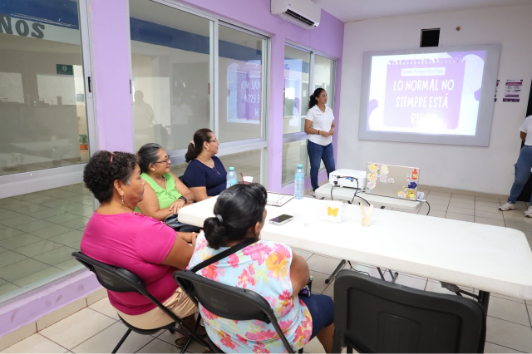
The Progreso City Council, headed by Mayor Erik Rihani González, through the Municipal Institute for Women (IMM), led by Luz Geovana Padrón Martínez, carried out an Occupational Therapy activity under the theme “What is normal is not always good”, with the purpose of providing participants with tools to recognize different manifestations of violence.
The activity addressed how some behaviors can be perceived as minor, everyday, or normal, even when they represent warning signs. The Violence Meter was used as an awareness and prevention tool, facilitating the identification of behaviors that can escalate into more serious situations.
Likewise, the importance of detecting these behaviors early and establishing healthy boundaries was promoted as part of the tools to foster relationships based on respect, dignity, communication, and equality.
This meeting highlighted the importance of seeking support services when needed, promoting timely attention to situations that may affect women’s well-being.
With these actions, the Progreso City Council continues to provide spaces for guidance and awareness that help women and citizens have more tools to recognize situations of violence and make timely decisions, thus contributing to the construction of a safer and more respectful community.
In Mexico, Yucatán’s coastal dunes are under threat from luxury real estate developments
The Dunas Tourist Complex by the real estate firm Designia Desarrollos has been temporarily shut down by Mexico’s environmental authorities for causing ‘irreversible damage’ to the beach ecosystem
Towers with 138 apartments are being built in a ‘non-developable’ coastal zone
A mound of sand rises amidst the vegetation of the coastal dunes. It’s just by the sea in Chuburná Puerto, a community in the municipality of Progreso, in the Mexican state of Yucatán. A few feet away, on the utility poles along the highway and at the fish sanctuary, advertisements promote the most exclusive developments in “the safest state” in Mexico.
One of these real estate projects — the Dunas Tourist Complex, by Designia Desarrollos — is being built there, atop an ecosystem inhabited by local flora and fauna. Some endangered species live there, such as the Mexican sheartail, the Yucatán wren, as well as three of the six sea turtle species found in the country.
“The dunes form part of the identity of the Maya people, because they’ve been passed down from generation to generation as a source of sustenance for many families,” says Karen Sosa, a native of Chuburná Puerto and a descendant of families who worked in the salt flats.
On July 31, Sosa participated in a demonstration in Mérida – the capital and largest city in Yucatán – against the Dunas Tourist Complex. According to Sosa, real estate developers see the coast as a vacant lot that’s ripe for investment. “But what they don’t see is that we’re talking about a thriving ecosystem that no luxury condominium can replicate or replace once it’s gone,” she adds.
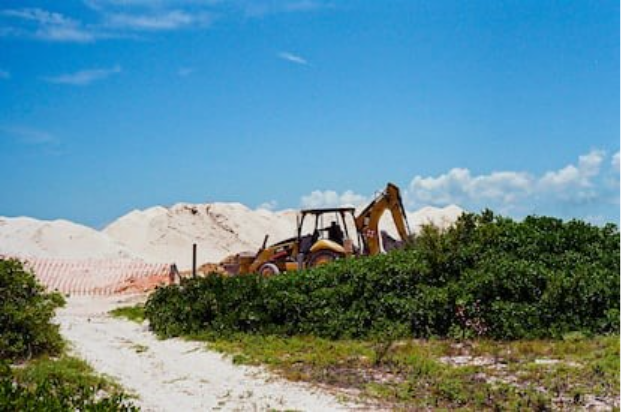
A bulldozer removes sand from the dunes, in order to build a real estate development in Chuburná, a community in the Mexican state of Yucatán.
On July 31, the protesters demanded the project be permanently halted, its permits revoked, administrative sanctions imposed, and native vegetation restored. They also called for Yucatán to adopt legislation guaranteeing prior, free and informed the sea are “barely sustainable, if at all.”
“A project of this kind is deeply concerning because of its impact on native biodiversity and the destruction of an ecosystem that acts as a buffer against ocean-related weather events, cold fronts, storms and hurricanes. Coastal dunes are the first line of defence against climate change,” she warns EL PAÍS.
In Yucatán, sediment carried by marine currents is deposited to the east of built infrastructure such as ports and other coastal works, while erosion tends to intensify to the west, placing additional pressure on coastal dunes.
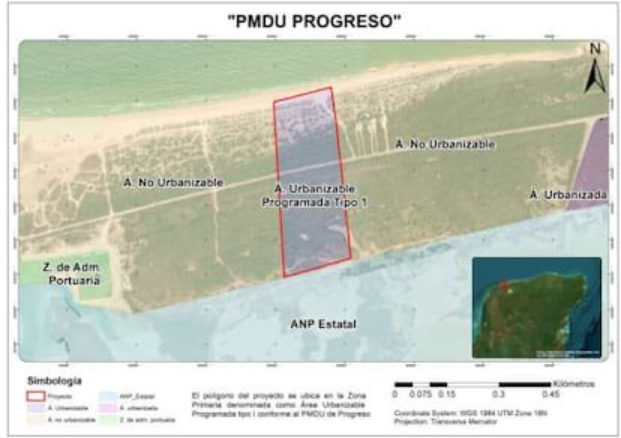
An area zoned for development amidst the Chuburná dunes, where Designia Desarrollos’ project is under construction.
138 apartments on the dunes
The protest in the state of Yucatán is the latest example of Mexicans rejecting tourism, industrial and real estate projects that pose environmental threats. Other cases in the country include Perfect Day — a Royal Caribbean cruise line’s theme park in Mahahual, Quintana Roo — and a German-owned ammonia plant in Topolobampo, Sinaloa. In the case of Yucatán, the outrage erupted after the deforestation of an area located within the coastal dunes.
In July of 2026, heavy machinery from the Designia Desarrollos project was removing sand from the Chuburná dunes. The project proposes the construction of 14 towers with 138 apartments in total, with capacity for approximately 552 people, according to the environmental impact statement submitted to Mexico’s Secretariat of Environment and Natural Resources (SEMARNAT).
The 99,000-square-foot project will feature two swimming pools and cafes on the north side, nestled between the dunes, the beach and the sea. The south side (the land is divided by the Yucalpetén-Chuburná Puerto highway) will house parking and a commercial area, adjacent to the marsh and coastal wetlands.
Progreso’s Municipal Urban Development Plan (PMDU), published in 2024, designates the dunes as a non-developable area, with one exception: the plot where the project is being built, within the dunes themselves, which is classified as Type 1 developable land. Auralux Representaciones, the company representing the Dunas Tourism Complex, cited this designation in its Environmental Impact Assessment as justification for building there. The assessment also argues that the area has already been altered by human activity, noting vehicle traffic on weekends, public holidays and during vacation periods.
According to the statement, the project won’t encroach upon the Federal Maritime Terrestrial Zone (ZOFEMAT), the 65-foot buffer zone extending into the sea. But Mendoza points out that this distance isn’t enough “to preserve the natural dynamics of beaches and coastal dunes, sediment dynamics and coastal protection. It would also affect biodiversity, as well as environmental goods and services, including regulatory, cultural, provisioning and supporting services.”
In the EIS, the company does acknowledge that the original landscape conditions will be lost. “[The project] will transform from a site with relatively well-preserved landscape conditions [due to coastal dune vegetation and mangroves] into a tourist complex, with buildings that will be visible from a great distance, a consequence of the virtually flat terrain of the entire region.”
Demonstration against the Dunas de Designia Desarrollos project in Mérida on July 31.
The EIS justifies the construction due to the pre-existing road alterations and other human uses (also related to tourism) that have led “to a deterioration in the quality of natural elements.” The document states that the project will increase the attractiveness for new construction in the area — “due to the exponential growth in coastal development” in Yucatán — and will increase the volume of people and vehicular traffic.
A social class being put before an ecosystem
The Dunas Tourist Complex, by Designia Desarrollo, is part of a series of real estate projects in the state of Yucatán that are transforming the landscape, the environment and society. Javier Becerril, an economist and author of an academic article titled The Marketing of Investment Lots in Yucatán, Mexico, explains to EL PAÍS that, for the past decade, successive state governments have promoted Yucatán as a paradise and as a destination for public investment, offering solid infrastructure, public safety and political stability. “They propose a trade-off: job creation at the expense of natural resources. The impacts are clear, given the destruction of dunes and mangroves, along with beach erosion,” Becerril notes.
In 2018, the land speculation and real estate boom began. Yucatán was being promoted in Mexico and abroad. Government officials and businesspeople, he says, predicted that the Maya Train would boost the hotel and real estate industries, so they started offering land in so-called “Pueblos Mágicos” (“Magical Towns”) and along the Emerald Coast, Yucatán’s coastline. “Those who benefited the least are the people of Yucatán, similar to the situation in Riviera Maya [the resort district located to the south of Cancún], where the major investors in the hotel and real estate industries are foreign,” he states. He has identified between 100 and 130 real estate projects in Yucatán, mainly vertical developments, residential complexes, villas and hotels.
Apartment towers represent a particular market segment, with premium features such as luxury finishes, private parking and security, with almost all of them facing the beach. The profits are enormous: the construction cost of the Dunas Tourist Complex is 18 million pesos (just over $1 million), according to the environmental impact assessment, while each apartment sells for between eight million and 13 million pesos ($472,000 to $768,000). The average salary in Yucatán is just 7,700 pesos per month ($450), lower than Mexico’s monthly minimum wage of 9,582.47 pesos ($562).
The residents and investors drawn to these developments “represent a new social class, one that bears little resemblance to life in Yucatán,” the economist argues. He says this stands in stark contrast to the state’s socioeconomic reality. “On the other side of the beach, and further inland, are belts of poverty, a clear manifestation of social exclusion.”
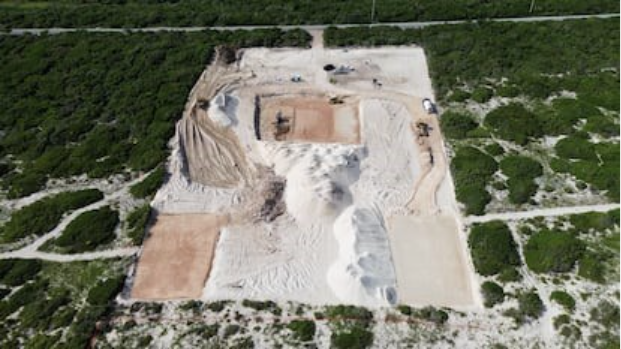
The site of the Dunas Tourist Complex, located along the highway to Progreso, Yucatán, pictured on July 25, 2026.
The main buyers are retirees from Canada, the United States and Europe, followed by domestic purchasers from Mexico City, Monterrey and Guadalajara. They typically buy these properties as retirement homes and winter retreats. Some newcomers to the Yucatán coast even assume the beach is private and block access to it, despite Mexican constitutional protections guaranteeing public access, a trend that, according to the researcher, displaces local residents.
“This has generated considerable resentment among residents in almost every beach community. There is social and economic exclusion that may be subtle, but it is noticeable in the differences between social groups, in restaurant prices, nightlife venues and clubs,” he says.
In the shadow of the concrete towers rising along Yucatán’s coastline, the people, vegetation and animals that share the dunes and the sea are being displaced.
The day before, on July 30, the project was temporarily shut down by the Federal Attorney for Environmental Protection (PROFEPA) for violating the conditions of its permits and for irregularities causing “direct, irreversible damage to the stability of the ecosystem and representing a loss of biodiversity.” The real estate development company Designia Desarrollos declined to be interviewed for this article.
The Chuburná dune scrubs are among the few remaining sand dune ecosystems along the Yucatán coast, which has been altered by civil and port construction. These dunes help beaches grow during the summer, while sand from the beaches is deposited on the dunes during hurricanes, cold fronts and the winter season, thus maintaining the natural dynamics of the coast.
Gabriela Mendoza, author of the Restoration Manual for the Coastal Dunes of the Yucatán Peninsula (2022), says that, over the years, it has been demonstrated that real estate developments built on coastal dunes and near
Free school supplies will be distributed at three police stations in Progreso. Sept.4/26
SUMA-T YUCATÁN WILL HOLD EVENTS THIS SATURDAY IN CHICXULUB PUERTO, FLAMBOYANES AND CHUBURNÁ PUERTO; THE PACKAGES WILL BE DISTRIBUTED WHILE SUPPLIES LAST
PROGRESO.— With the aim of supporting the family economy and helping girls and boys have the necessary materials to continue their studies, the civil association Suma-T Yucatán will hold new free school supply distribution days this Saturday, September 5, in three communities of Progreso.
The first activity will begin at 9:00 a.m. at the dome of the main park court in Chicxulub Puerto. Afterward, the event will move to Flamboyanes, where the distribution will take place at 12:00 p.m. at the covered court.
The tour will conclude at 7:00 pm in Chuburná Puerto, with the dome of the main park court as its headquarters.
The initiative is being managed by teacher Gabriela Jiménez Contreras, an ally of Suma-T Yucatán, who has promoted these actions to broaden their reach and benefit students in the municipal seat and its communities.
Engineer Lila Frías Castillo has also supported this effort, highlighting the importance of joining forces and initiatives that promote education and well-being for families in Progreso.
These workshops are part of the actions undertaken by Suma-T Yucatán to support academic training and contribute to preventing school dropout, through the delivery of useful materials for classroom activities.
School supply kits will be distributed free of charge at each location until supplies last.
Progreso celebrates its senior citizens in San Joaquín September 1, 2026 Progresohoy
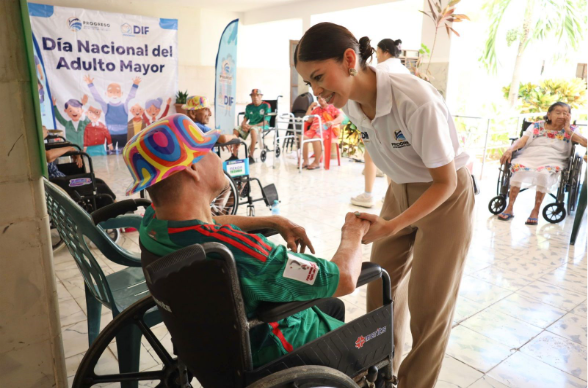
PROGRESO.– In commemoration of National Senior Citizens Day, the Progreso City Council, led by Mayor Erik Rihani González, held a day of recreational and social activities for the residents of the San Joaquín Nursing Home, with the aim of providing them with moments of joy, care, and well-being.
During the celebration, the senior citizens participated in various activities, including coloring, dancing and a mini fair, which fostered camaraderie and allowed them to share pleasant moments in a joyful atmosphere.
As part of this day, they also received services such as haircuts and enjoyed food prepared under the guidance of a nutritionist from the Municipal DIF, contributing to offering them a comprehensive experience focused on their well-being.
These activities were attended by the councilwoman of the Municipal DIF, Marytere Bates Hevia; the director of the Municipal DIF, Cristina González Gamboa; the head of the Basic Rehabilitation Unit (UBR), Arbely Pedro Remes, as well as physiotherapists from said unit, who accompanied the residents during the day.
With these actions, the Progreso City Council reaffirms its commitment to creating spaces for coexistence, care and well-being for older adults, recognizing their valuable contribution to families and the community.
First Wind Farm of Current Presidential Term Begins Construction in Yucatán Yucatan Times Aug 13,/26

Photo by Narcisa Aciko on Pexels.com
PROGRESO, Mexico — Construction has officially commenced on the Tizimín II Wind Park in Yucatán, marking the first wind energy project to break ground under Mexico’s updated 2025 national energy policy framework, according to an analysis published in El Financiero.
The project entered its physical construction phase following the arrival of key wind turbine components at the Deepwater Port of Progreso. Representing a private investment of 2.6 billion pesos (approximately $140.6 million), the facility will feature an installed capacity of 75 megawatts and is expected to generate an estimated 272 gigawatt-hours annually once commercial operations begin in 2028. The development is projected to create around 1,000 direct and indirect jobs in eastern Yucatán.
While modest in size within the global energy landscape, Tizimín II holds significant national importance. It is the first renewable energy initiative to complete the full regulatory cycle—from permit issuance and financing to engineering contracts and construction—under President Claudia Sheinbaum’s administration.
Yucatán has historically operated on a structurally isolated electrical grid characterized by limited transmission capacity to import power from central Mexico, paired with an annual demand growth of nearly 3.8 percent. The new wind farm will interconnect with the 115-kilovolt Tizimín substation to bolster local energy security.
The wind park is part of a broader regional energy transition strategy. The state is currently building robust baseload capacity through combined-cycle natural gas plants, including Mérida IV (499 MW) and Riviera Maya (1,020 MW), backed by the upcoming Cuxtal II pipeline.
State officials, led by Governor Joaquín Díaz Mena, are aiming to position Yucatán as a major clean energy hub in southeastern Mexico. The state currently holds 300 MW of installed solar and wind capacity, with multiple additional projects underway to support the federal goal of adding over 22,000 MW of renewable power nationwide by 2030.
Prime Center Distrito Xcanatún: North Mérida’s New Shopping and Lifestyle Destination 13 august 2026
Copied
Prime Center Distrito Xcanatún is a new mixed-use shopping center that recently opened along the Mérida–Progreso highway. Designed to serve the rapidly growing communities of northern Mérida, Yucatán, this modern development brings together shopping, dining, healthcare, and everyday services in one convenient location. The complex currently features 17 businesses, anchored by a Chedraui Selecto supermarket, all within a contemporary setting built around convenience and accessibility.
Alongside Chedraui Selecto, visitors and local families at Prime Center can enjoy a comprehensive retail mix spanning dining, health, wellness, and everyday services:
Dining & cafés: Established brands including Boston’s Pizza, Los Trompos, Starbucks, Santa Clara, Chocolates Cacep, and La Crepería.
Personal care & wellness: Specialized providers such as Biomédicos de Mérida, Ópticas Hannia, Todo para sus Pies, and the Humanimals veterinary clinic. Telecom & logistics services: AT&T customer service, Envíoexpress shipping services.
Specialized retail: Products and services for every need, including Tintorerías Max dry cleaning, Impresto!, Arbemás, Fotoideas, Pinturas Mapla, and Rocase.
Northern Mérida has consistently led the state in residential growth and real estate appreciation in México. Prime Center sits at the center of this high-demand area, offering direct access to some of the region’s most exclusive residential communities: Yucatán Country Club, and La Ceiba, Altozano, La Rejoyada, and Provincia.
The fast-developing residential corridor of Temozón Norte and Xcanatún
This strategic location serves both Yucatecan families and the growing international expat community residing in northern Mérida. Positioned along the main highway connecting the capital to the coast, the complex easily turns a quick errand into an enjoyable afternoon of shopping and dining, within an ecosystem where specialized health, wellness, and lifestyle services have a prominent focus.
Upcoming openings and retail spaces available. The tenant lineup at Prime Center Distrito Xcanatún continues to grow, with several major brands currently preparing to open: Banamex: Full-service banking and financial services, El Globo: Traditional bakery and artisan pastry shop.,Telcel: Mobile customer service center and telecommunications.
Additionally, Prime Center is seeking to onboard new commercial sectors, including educational academies, fitness studios, and boutique fashion stores to match the lifestyle needs of nearby neighborhoods.
The project was developed by Bterra Desarrollos, the real estate division of Grupo Bepensa, with a clear focus on offering total convenience within a secure, modern architectural space. For brands and businesses looking to position themselves in front of a high-purchasing-power market, Prime Center still has select commercial spaces available for lease.
Sheinbaum highlights the expansion of the Port of Progreso as a strategic project for Yucatán Aug 14/26 Progresohoy
Public and private investment totals 12.225 billion pesos; the project will expand the port’s operational capacity and will be complemented by the Maya freight train. Claudia Sheinbaum Pardo highlighted this Friday the expansion and modernization of the Port of Progreso as one of the strategic projects for the economic and logistical development of Yucatán, a result of the coordination between the federal and state governments, headed by Joaquín Díaz Mena, as well as the participation of the private sector.
During the People’s Morning Press Conference, the federal president recalled that the port expansion was one of the projects proposed by Díaz Mena since his campaign, as part of the strategy called Mayan Renaissance, and noted that since then it had the support of her administration.
“One of the projects that Joaquín Díaz Mena proposed during his campaign, such as the Mayan Renaissance, among other things, was to expand the port of Progreso, and we agreed to it from the beginning, and it is being done,” Sheinbaum stated.
According to the information presented, the project represents a comprehensive investment of 12 billion 225 million pesos from federal, state and private resources.
Among the completed projects is the dredging of the navigation channel, for which the Yucatán government allocated 1.63 billion pesos. This is complemented by a private investment of 948 million pesos from SSA Marine Mexico to expand the cruise terminal and its docking area.
As part of the transformation of the maritime terminal, the construction of two new platforms is also progressing, which together will cover 40 hectares.
These works will allow the operational area of the Port of Progreso to increase from 34 to 114 hectares, in addition to creating conditions to receive larger vessels and increase commercial and logistical operations.
The expansion seeks to strengthen Progreso’s position as one of the main entry and exit points for goods in the Yucatan Peninsula and to take advantage of its strategic location in the Gulf of Mexico.
The port project will be accompanied by the Maya freight train, for which a federal investment of 25 billion pesos is planned.
This infrastructure will connect the Port of Progreso with the national rail network and with the Interoceanic Corridor of the Isthmus of Tehuantepec, expanding the alternatives for the transfer of goods to and from the Peninsula.
Sheinbaum pointed out that the combination of port and rail infrastructure will reduce transportation costs and improve connectivity in southeastern Mexico.
With these works, the Port of Progreso is poised to significantly increase its capacity and become a key part of Yucatán’s logistics and economic development strategy in the coming years.
There are high expectations for the start of the octopus fishing season in Yucatán: Randyr Castillo ProgresoHoy July 30/26
The Director of Fisheries estimates the departure of 250 larger vessels, 200 coastal boats, and the participation of some 4,000 seafarers starting on August 1st.
Just hours before the official start of the octopus fishing season, the Director of Fisheries for the Progreso City Council, Randyr Castillo Alférez, assured that there is an encouraging outlook for the fishing sector, with good production expectations, significant international demand, and thousands of fishermen ready to head out to sea.The official reported that approximately 250 vessels from the larger fleet are already prepared to set sail on August 1st, while roughly 200 smaller boats are expected to depart from the cove. In total, it is estimated that some 4,000 fishermen will participate in the start of the season.
“We are doing very well, we have high hopes for this octopus season,” said Castillo Alférez, who explained that during the first few days the boats will carry out exploratory tours to locate the areas with the greatest presence of the mollusk along the Yucatecan coast.
Regarding market behavior, he indicated that the initial price of octopus could be between 80 and 90 pesos per kilogram, although he was confident that strong demand would contribute to improving conditions for fishermen.
He noted that the previous season’s octopus stocks were practically depleted due to strong sales both domestically and internationally.
He noted that the United States consolidated its position this year as an important destination for exports, mainly to Los Angeles, California, while in Europe demand continues from countries such as Spain, Greece and Italy.
“I think it will be a very good season for all fishermen. There is significant demand so that the sector can breathe a little easier,” he stated.
Regarding safety measures, he noted that life jackets are being distributed this Thursday to fishermen who did not yet have this equipment, as part of the “Safety at Sea” program.
The Director of Fisheries called on fishermen and women to use protective equipment during their workdays and to prioritize safety on every trip to sea.
The octopus fishing season in Yucatan officially begins this August 1st and represents one of the most important economic activities for the fishing communities of the state, particularly in the port of Progreso.
Policy
The Mayan Renaissance Government will provide free transportation for users of the CREE (Center for Rehabilitation and Special Education).
Governor Joaquín Díaz Mena led the signing of an agreement between DIF Yucatán and Uber Mexico, through which free rides will be granted to users of the CREE so that they can attend their consultations and therapies, reduce mobility barriers and give continuity to their rehabilitation processes.
This initiative, promoted in coordination with the national inclusion and well-being strategy led by President Claudia Sheinbaum Pardo, will provide greater peace of mind to families, reduce absenteeism from treatments, and bring more opportunities to those who require specialized care.
Thanks to the agreement, CREE users will have access to rides donated by Uber Mexico to attend appointments, evaluations, and therapy sessions, strengthening a public policy focused on people with disabilities and their families.
During the signing, Governor Joaquín Díaz Mena explained that the CREE’s technical assessment identified transportation as one of the main barriers to continued rehabilitation treatment, as many families face financial limitations that force them to miss or postpone their therapies.
“Interrupting a treatment that requires consistency makes it difficult to achieve results. When a person misses their rehabilitation appointment, they lose progress that will take weeks of effort to recover. Sometimes, a family has to choose between paying for transportation or covering basic household needs,” she stated.
In its first phase, the program includes 500 trips that will be assigned according to socioeconomic criteria established by the CREE (Center for Rehabilitation and Special Education) to ensure that the support reaches those who need it most. The intention is for this experience to lay the groundwork for expanding the benefit to more people with disabilities throughout Yucatán.
“When the private sector and the government work together, those who need it most win,” affirmed the state governor, who thanked the Government of Mexico, led by President Claudia Sheinbaum Pardo, for its ongoing support, as well as the National DIF System for strengthening inclusion and well-being initiatives in Yucatán.
In turn, the Honorary President of DIF Yucatán, Ms. Wendy Méndez Naal thanked Uber Mexico for its compassionate and committed support of this deeply human cause, recognizing that a ride can mean much more than just transportation.
Méndez Naal emphasized that this support provides peace of mind to families, reduces uncertainty about how to get to therapy sessions, and opens up more opportunities for children, teenagers, and people with disabilities to continue their rehabilitation processes.
He affirmed that DIF Yucatán will continue to add allies committed to building a more inclusive, supportive, and humane state, where no one’s well-being is limited by a lack of mobility.
For his part, Daniel Rosado Méndez, Director of Government Relations and Public Policy at Uber Mexico, emphasized that this alliance demonstrates that social assistance not only consists of providing services, but also of listening, supporting, and creating opportunities for those who need them most.
“This collaboration will facilitate the mobility of people with disabilities and senior citizens, supporting actions aimed at the comprehensive development of families, equity, and inclusion. By helping to reduce these mobility barriers, we seek to bring people closer to DIF services and support with what Uber does best: safe and efficient rides,” he stated.
After the signing of the agreement, the first voucher for a collaborative ride was symbolically presented to Álvaro Pérez Euán, a user of the CREE (Center for Rehabilitation and Special Education), who shared the importance of being a beneficiary of this program.
The ceremony was attended by the Government Relations and Public Policy Manager of Uber Mexico, Emma Vasallo Molina; the General Director of DIF Yucatán, Shirley Edith Castillo Sánchez; the Director of CREE, Lidieth Denis Alcocer; the Federal Deputy and President of the Citizen Security Commission of the Chamber of Deputies, Jessica Saidén Quiroz; the Local Deputy and President of the Permanent Commission of the State Congress, Naomi Peniche López; and the Federal Deputy, Óscar Brito Zapata.
Progress
They are promoting spaces for older adults with the Silver Hugs strategy August 5, 2026 ProgresoHoy
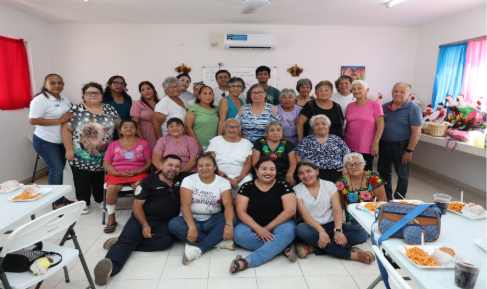
PROGRESO.– With the commitment to promote actions that favor the well-being and social integration of older adults, the Progreso City Council, headed by Mayor Erik Rihani González, carried out, through the Municipal DIF, the “Silver Hugs” meeting, an activity designed to strengthen the bonds of friendship and promote healthy coexistence among its participants.
As part of the activities offered by the Club for Older Adults, the meeting was organized by the Municipal DIF, directed by Cristina González Gamboa, with the purpose of providing its members with a space for coexistence, integration and recreation that contributes to their emotional and social well-being.
During the day, the attendees participated in a gift exchange accompanied by a hug, a dynamic that marked the beginning of a morning of camaraderie. Afterwards, they enjoyed team games and recreational activities that fostered an atmosphere of joy, respect, and fellowship.
The Municipal DIF invites those interested in joining the Senior Citizens Club to visit its facilities to learn about the activities and services offered by this social space, designed to promote active participation and well-being for this sector of the population.
With these types of initiatives, the Progreso City Council reaffirms its commitment to promoting programs and activities that encourage participation, social integration and well-being of older adults, contributing to improving their quality of life.
Policy
Rita Cetina Scholarship: $2,500 will be deposited for school expenses
MÉRIDA.– Thousands of Yucatecan families who are beneficiaries of the “Rita Cetina” School Uniform and Supplies Support Scholarship for primary school students will receive a deposit of 2,500 pesos between August 3 and 14 to purchase what they need for the upcoming return to classes.
The head of the Office of Representation of Scholarships for Well-being in Yucatán, Roger Humberto Ávila Carrillo, reported that the funds will be deposited directly into the cards of the beneficiaries, following a schedule based on the initial letter of the first surname of the registered mother, father or guardian.
He specified that during the incorporation operation, 46,306 cards were delivered in 1,474 schools in the state, which represented an investment of 140 million 552 thousand 500 pesos.
She also explained that families already enrolled in the program will receive the deposit on the same card they already use, so she recommended checking the corresponding date according to the established schedule.
The deposit schedule was distributed as follows: August 3 for letters A and B; the 4th for C; the 5th for D, E and F; the 6th for G; the 7th for H, I, J, K and L; the 10th for M; the 11th for N, Ñ, O, P and Q; the 12th for R; the 13th for S; and the 14th for T, U, V, W, X, Y and Z.
If the deposit is not reflected in the bank account, the official urged families to go to the offices of Becas para el Bienestar or call 079 for assistance.
During the press conference it was also reported that, as of August, the Welfare Scholarship programs have benefited 299,234 students in basic, upper secondary and higher education in Yucatán, with an investment of more than 1.141 billion pesos.
Of the total, 203,263 basic education students have received support totaling more than 636 million pesos; in upper secondary education, 77,603 young people benefit from an investment of nearly 295 million pesos, while in higher education, 18,308 students are supported with resources totaling more than 210 million pesos.
Ávila Carrillo also announced the “Your Place Awaits You” strategy, aimed at locating students who have completed secondary school but have not yet registered to continue their upper secondary studies.
As part of this strategy, home visits will be conducted to assess the academic standing of young people and encourage them to enroll in available programs. The goal is to visit 6,363 homes; so far, 1,674 have been visited, of which 924 were located and 750 remain unlocated, while 4,689 visits are still pending.
Finally, the representative of Scholarships for Well-being reiterated that these programs are part of the Mexican government’s educational policy to ensure that no girl, boy, or young person abandons their studies for economic reasons and to strengthen access to education throughout the country.
Progreso Pier Recognized as World’s Longest Pier by Guinness World Records July 27, 2026
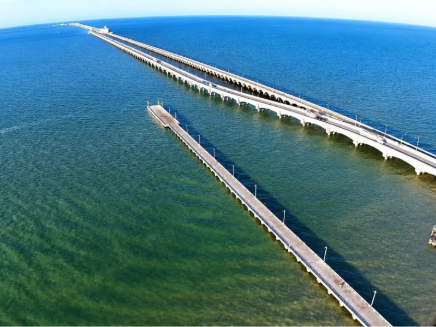
Progreso Pier extends 8 kilometers over the Gulf of Mexico, connects the coast to deep waters, and earns the Guinness record as the world’s largest.
On the coast of the Yucatán Peninsula, a port structure extends over the Gulf of Mexico until it practically disappears on the horizon. The Progreso Pier officially measures 8,018.98 meters in length, equivalent to just over 8 kilometers, and holds the record recognized by the Guinness World Records as the longest pier or wharf in the world.
The recognition was granted to the Municipality of Progreso on July 1, 2023. The official measurement transformed a port infrastructure built and expanded over decades into a world record holder, surpassing similar structures by the total distance covered between the coast and the docking areas.
The dimension is difficult to visualize just by the numbers. Considering a continuous path, the 8,018.98 meters are equivalent to approximately 80 football fields of 100 meters lined up or almost two and a half times the length of the Rio-Niterói Bridge over Guanabara Bay, whose total section is approximately 13 kilometers, but not entirely over a port platform of the same type.
The shallow sea forced engineers to advance kilometers beyond the coast
The colossal extension did not arise merely from the pursuit of a record. It was determined by the natural conditions of Progreso’s coastline, where the seabed remains shallow for an exceptionally long distance.
This characteristic prevented larger ships from approaching directly to the coast. To reach sufficient depth for port operations, it became necessary to take the infrastructure out to the open sea, creating a permanent link between the city and a zone capable of receiving vessels with greater draft.
Fishing and aquaculture at the heart of Yucatán’s climate agenda
During the second ordinary session of the year of the Intersecretarial Commission on Climate Change, progress was presented on the strategy to support the fishing sector and coastal communities in the face of the effects of climate change. July 24, 2026 Progresoh
Climate change is already impacting the productivity, biodiversity, and livelihoods of thousands of families in Yucatán who depend on the sea. Therefore, the State Government is strengthening its efforts to prepare the fishing and aquaculture sector for phenomena that alter marine environmental conditions and affect the lives of coastal communities.
During the Second Ordinary Session of the Intersecretarial Commission on Climate Change (Ciclima), progress on state projects related to climate change mitigation and adaptation was reviewed, as well as the status of the Special State Program on Climate Change (Peecc), an instrument that will allow the integration of actions from different agencies and follow-up on the climate agenda of Yucatán.
During the session, led by the Secretary of Sustainable Development (SDS), Neyra Concepción Silva Rosado, in her capacity as president of the commission, the head of the Secretariat of Sustainable Fisheries and Aquaculture (Sepasy), Lila Frías Castillo, presented the progress of the Climate Action Plan for the Fisheries and Aquaculture Sector, a strategy built on the basis of scientific evidence and the knowledge of coastal communities.
The official highlighted that more than 50,000 Yucatecan families depend directly or indirectly on fishing, so preparing the sector to face the effects of climate change is a priority for the State Government.
“We want to protect the future of the fishing sector in Yucatán and we have the responsibility to build public policies that allow them to face new climate challenges, generate opportunities and strengthen the state’s food sovereignty,” said Frías Castillo.
One of the plan’s key elements involves strengthening community monitoring of red tide through joint work between fisherwomen, fishermen and scientific institutions, taking advantage of the experience of those who carry out daily activities on the high seas.
In coordination with the Scientific Research Center of Yucatán (CICY) and other specialized institutions, the Yucatán Ministry of Agriculture (Sepasy) is promoting a model for fishing communities to promptly report observed changes in the sea. This information will contribute to the issuance of early warnings, scientific research, and decision-making to protect the sector.
“Many times, fishermen are the first to detect changes in the sea. We want that knowledge to become useful information for scientific research and for the protection of the fishing sector,” explained Frías Castillo.
During her participation, the head of Sepasy pointed out that protecting fishing also means protecting food security, since adapting to climate change not only involves conserving marine resources, but also strengthening the economy of coastal communities through added value, productive diversification and sustainable development.
Ciclima brings together state agencies to coordinate projects related to climate change and address environmental challenges from specific sectors, such as fishing, aquaculture, production and community.
As part of the session, the president and technical secretary of the State Citizen Advisory Council on Climate Change Mitigation and Adaptation, Alejandra Calzada Vázquez Vela and Francisco de Jesús Guerra Martínez, presented the organization’s work plan, with an emphasis on citizen participation within the state climate agenda.
In this way, the Government of the Mayan Renaissance is advancing a climate agenda that combines science, community knowledge, and actions on the ground to protect marine ecosystems, strengthen coastal communities, and safeguard the economy of families who live off fishing and aquaculture.
Mérida remains one of the safest cities in the country: ENSU July 24/26
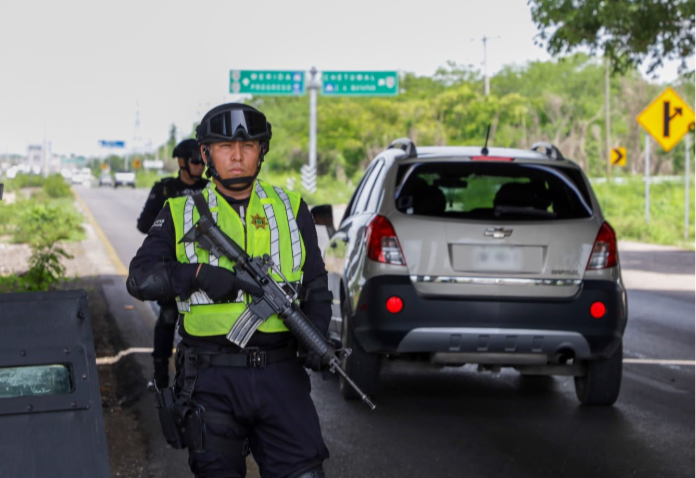
The National Survey of Urban Public Security by Inegi places the Yucatecan capital with a perception of insecurity of 38.2%, 21.6 percentage points below the national average.
They are strengthening the care of cardiometabolic diseases in Yucatán July 24, 2026
More than 18,000 people receive treatment for hypertension and nearly 15,000 for obesity; the SSY promotes early detection and control of risk factors.
MÉRIDA.— The Yucatán Health Secretariat (SSY) has reinforced actions to prevent, detect and control cardiometabolic diseases, mainly obesity, high blood pressure and other factors that increase the risk of cardiovascular diseases.
The strategy includes medical care, nutritional guidance, promotion of physical activity, and patient follow-up, with the aim of preventing complications and improving the quality of life of people living with these conditions.
According to the most recent data from institutional platforms, 18,059 people are currently receiving treatment for high blood pressure in Yucatán.
Of that total, 9,205 patients keep their blood pressure levels under control, representing 50.9%.
Regarding obesity, 14,889 people receive care in health services and 4,225 have managed to keep this condition under control, equivalent to 28.3% of the total treated.
The SSY pointed out that obesity and cardiovascular diseases represent significant public health challenges and require ongoing attention, as they can contribute to the development of other illnesses and complications.
Through the Directorate of Nutrition and Chronic Diseases, actions are developed aimed at reducing these risk factors through lifestyle changes and comprehensive patient care.
Among the tools used are the Hearts strategy, in addition to the Medical Specialty Units for Chronic Diseases (Uneme-EC), the Mutual Aid Groups (GAM) and the first level of care services.
These programs provide medical and nutritional treatment, education to promote healthy eating, promotion of physical activity, and follow-up of patients based on scientific evidence.
The agency indicated that these actions are part of the prevention policy promoted by the state administration to strengthen the care of chronic diseases and reduce cardiovascular risks among the population.
Finally, the SSY recommended going to the Health Center periodically to have risk factor detection tests, receive nutritional guidance and, in case of having any cardiometabolic disease, maintain the corresponding medical follow-up.
The Uaymitún tourist center reopens ProgresoHoy July 23/26
After being closed for six years, the rehabilitated space reopened its doors to expand recreational options during the holiday season.
During the commemoration, attendees enjoyed a program that included a performance by the Sac Nicté Folkloric Ballet, a performance by the rock band Everest, the traditional cake cutting, a special tour of the museum’s rooms, and an astronomical observation led by the Astronomical Society of the Autonomous University of Yucatán (UADY).

First 12 Locomotives Arrive for Mayan Train Cargo Line Yucatán Magazine July 19, 2026
The first 12 locomotives for the Tren Maya’s freight line have arrived in Puerto Morelos, Quintana Roo, marking a milestone for the cargo project expected to begin operating in January 2027.
President Claudia Sheinbaum made the announcement during a visit to the rail site, just before departing for New York to attend Sunday’s World Cup final. She said the locomotives are already being put to work, hauling construction materials for the rest of the freight system.
“We have great news: the first 12 locomotives for the Tren Maya cargo line have arrived, and the project has made major progress,” Sheinbaum said in a video posted to her social media accounts. “In fact, these locomotives are already transporting some of the materials needed to build the Tren Maya cargo line.”
The freight line runs alongside the passenger Tren Maya, which has carried more than 2.3 million riders since opening in December 2023. Once complete, the cargo network will link to the Interoceanic Corridor of the Isthmus of Tehuantepec at Palenque via the so-called Línea FA, connecting the ports of Coatzacoalcos and Palenque, along with a spur from Poxilá to Progreso. Officials project the freight system could move up to 4 million metric tons (about 4.4 million U.S. tons) of cargo annually by 2030.
Sheinbaum held a private meeting beforehand with governors from the five states the train crosses: Mara Lezama of Quintana Roo, Layda Sansores of Campeche, Joaquín Díaz Mena of Yucatán, Javier May of Tabasco and Eduardo Ramírez of Chiapas. Also on hand were Defense Secretary Ricardo Trevilla Trejo and Andrés Lajous Loaeza, head of Mexico’s rail transport regulatory agency.
The president said freight operations are expected to launch in January, shortly after the current fiscal year turns over. “These are the five states the passenger Tren Maya passes through, and very soon, in January, the cargo train will be inaugurated,” she said.
The freight expansion has been years in the making. Crews cleared 47 hectares (116 acres) of forest in Yucatán last year to build a major depot for the line, a move that drew criticism from environmental groups even as regulators attached conditions meant to limit ecological damage. The cargo network is designed to shift some freight traffic off highways and onto rail, cutting transportation costs for businesses moving goods across the Yucatán Peninsula.
For residents near Mérida and Progreso, the freight line has been a recurring source of questions about construction timelines and rail crossings.
Government officials have not detailed exactly how many additional locomotives are expected before the freight line’s full launch, or which routes will see cargo service first. Those details, along with specific investment figures for the freight project, have not yet been made public.
Fast Facts:
- Location: Puerto Morelos, Quintana Roo
- Announcement date: Saturday, July 18, 2026
- Locomotives delivered: 12
- Expected freight launch: January 2027
- Projected annual freight capacity by 2030: 4 million metric tons (4.4 million U.S. tons)
- States along the route: Quintana Roo, Campeche, Yucatán, Tabasco and Chiapas
- Freight line connects to: the Interoceanic Corridor at Palenque and the port of Progreso
With reporting from El Heraldo de México
Mexico declares tender in Progreso port for up to US$80mn July 10/26
Container terminals Productivity / Efficiency Engineering Contractor Company Port authorities Other (Contractor Companies)
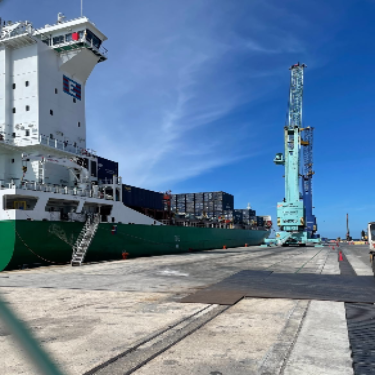
Mexico declared void the tender to carry out construction dredging and create a 40ha platform in the port of Progreso, in Yucatán, after determining that none of the four bids met the requirements of the competition, which delays a key project to expand the capacity of the state’s main port.
The procedure corresponded to the national public tender LO-13-J2U-013J2U002-N-5-2026 to contract the construction dredging and formation of the 40ha northern platform, as part of the first stage of expansion and modernization of the port facility. In the ruling, the Administración del Sistema Portuario Nacional (Asipona) Progreso concluded that, after the legal, technical and economic review, “there are no compliant bids” and, therefore, declared the tender void.
In the process the following took part the consortium Boskalis Marine Contracting and Offshore Services–Dragamex, Dredging International México, Mexicana de Dragados and Van Oord México. Their financial proposals ranged from 897,96 million pesos (US$51 million (mn)) to 1.394,32 million pesos (US$80mn), excluding VAT. However, all of them were rejected during the compliance evaluation.
According to the award decision, the Boskalis Marine Contracting and Offshore Services–Dragamex consortium was disqualified due to inconsistencies in the technical documentation submitted for the joint proposal, while Dredging International México, Mexicana de Dragados, and Van Oord México were rejected mainly for failing to demonstrate their financial capacity by not submitting the required financial statements from the 2025 tax return. Additionally, these three companies incurred inconsistencies in the analysis of financing costs by considering positive values for the interest rate, in contravention of the terms of the tender.
The tender is part of the project to expand and modernize the port of Progreso, whose estimated investment amounts to 7.225 billion (bn) pesos (US$412mn). The first stage includes dredging approximately 1.41 million cubic meters of material to create a 40ha land reclamation platform, with the aim of increasing the logistics and operational capacity of Yucatán’s main port and strengthening its role within the federal strategy to modernize maritime infrastructure.
With the declaration of the tender as void, Asipona Progreso must define the mechanism with which it will seek to reactivate the contracting of this strategic project, either through a new procedure or through adjustments to the bidding terms, in order to maintain the port’s expansion schedule. (The original version of this content was written in Spanish)
The Navy deploys its Operation Lifesaver Summer 2026
The Navy’s “Operation Lifesaver Summer 2026” plan kicks off on the beaches of Progreso with more than 130 naval personnel, vessels, and patrols until August 30th.
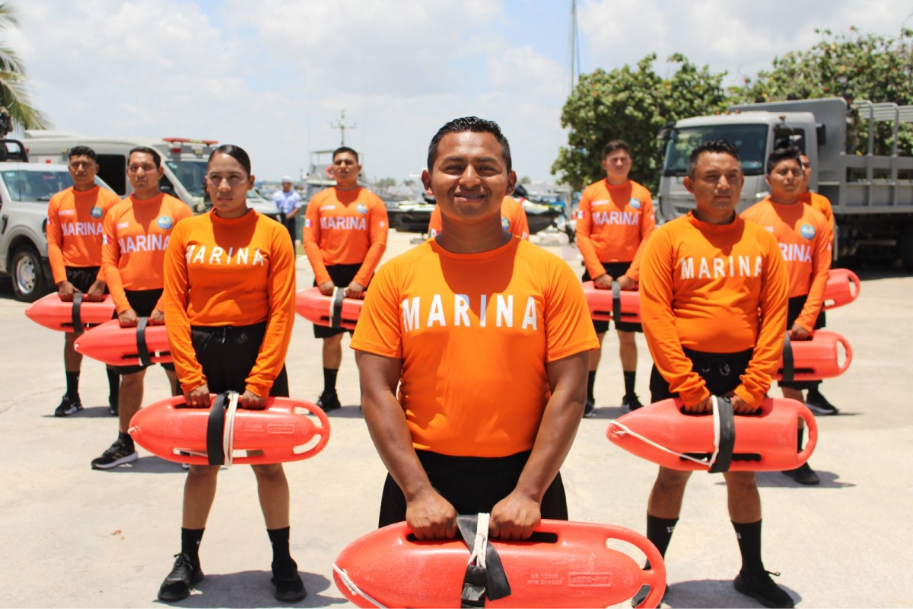
PROGRESO.– With the deployment of personnel, vessels and surveillance units, the Secretariat of the Navy, through the Ninth Naval Zone, launched the Navy Plan “Operation Lifesaver Summer 2026”, a strategy that seeks to guarantee the safety of thousands of national and international tourists who will visit the Yucatecan beaches during the holiday season.
The operation will remain in effect from June 30 to August 30 and will be carried out mainly on the beaches of Progreso, as well as in the tourist centers that are part of the jurisdiction of the Mexican Navy, in coordination with Civil Protection authorities and other institutions of the three levels of government.
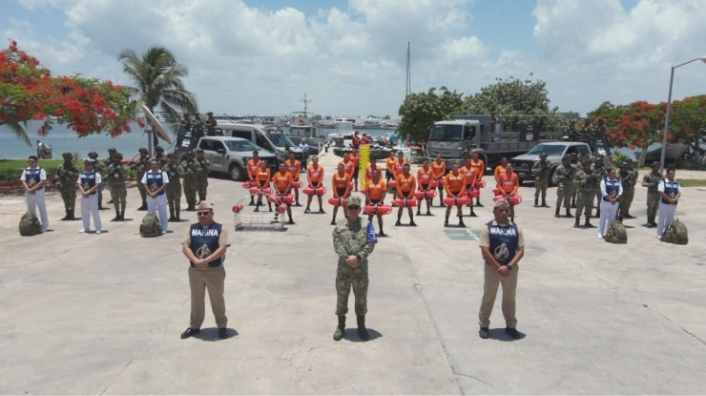
For these actions, 133 naval personnel were deployed, including admirals, captains, officers, enlisted personnel, sailors, and civilian staff, who will be supported by five naval units, including two ships for maritime surveillance, three smaller vessels for rescue operations, and three land units that will reinforce security patrols in the coastal area.
The Mexican Navy Secretariat reported that the participating personnel have specialized training to respond immediately to emergency situations, providing rescue actions, first aid, maritime, land and air surveillance and security, with the purpose of safeguarding human life at sea.
As part of the operation, the Yucalpetén Naval Search, Rescue and Maritime Surveillance Station (ENSARYUK) will also participate, made up of specialized personnel who will promptly respond to calls for help from the public.
Naval authorities urged visitors to respect at all times the instructions of the Port Authority and the flag system installed on the beaches. The green flag indicates safe conditions for entering the sea; the yellow flag signals caution due to currents or changes in the weather, while the red flag prohibits access to the water because it poses a risk to swimmers.
During the holiday period, first aid and rescue stations will also be set up where Naval Health personnel and lifeguards will offer first aid medical care to those who require it.
The Navy called on the public to maintain preventive measures such as supervising minors, avoiding entering the sea after consuming food or alcoholic beverages, using life jackets when sailing in small boats, staying constantly hydrated, using sunscreen, respecting the instructions of lifeguards, and keeping beaches clean.
In case of emergency at sea, the Ninth Naval Zone made available the telephone number 999 960 0682, in addition to the national line 800 MARINA1 (800 627 4621), in order to provide immediate attention to the public during this holiday season.
Work on the bridge at the entrance to Progreso is 54% complete.
SICT reports that the foundation of the piers has been completed and is maintaining road operations to guarantee access to the port during the work on the bridge located near the rowing and canoeing course.
June 30, 2026 ProgresoHoy
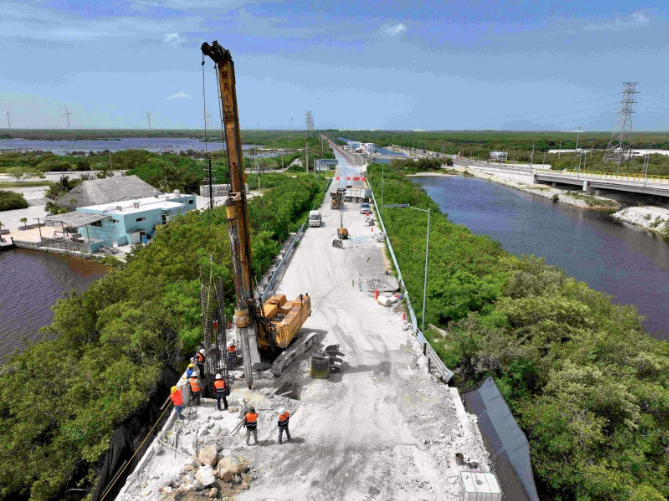
PROGRESO.– The rehabilitation and reconstruction of the bridge located at kilometer 34.1 of the Mérida–Progreso federal highway is 54 percent complete, reported the Ministry of Infrastructure, Communications and Transportation (SICT), highlighting that the work is progressing according to schedule just over a month after it began.
Among the main advances is the completion of the foundation of the eight piles that are part of the new structure, while the demolition work of slabs, concrete parapets and benches continues, work necessary for the removal of the existing prefabricated beams.
The federal agency reported that the 14 new girders to be installed on the bridge are ready and that work is currently underway to prepare the formwork for the second girder of the substructure. In addition, the neoprene bearings, specialized components that distribute loads, absorb displacements, and reduce vibrations between the girders and the supporting structure, are now in place.
As part of the measures to maintain traffic flow to the port of Progreso, the temporary two-way detour on lanes B, heading from Progreso towards Mérida, remains in operation. This measure allows traffic to flow for both vehicles entering and leaving the municipality, on the section between the access interchange to the port and the junction towards Chelem.
Given the increase in visitors during the summer vacation period, the SICT recommended that those traveling from Mérida to Chicxulub Puerto, San Benito and Telchac use the Conkal–Chicxulub Puerto highway as an alternate route, in order to reduce travel times and avoid congestion in the construction zone.
Finally, the agency urged motorists to respect speed limits, heed warning signs, drive with caution, and follow the instructions of the personnel in charge of the traffic operation to ensure the safety of all users.
Temporary shelters opened in Progreso due to heavy rains
Authorities urge the public to stay informed and take precautions.
May 29, 2026 ProgresoHoy
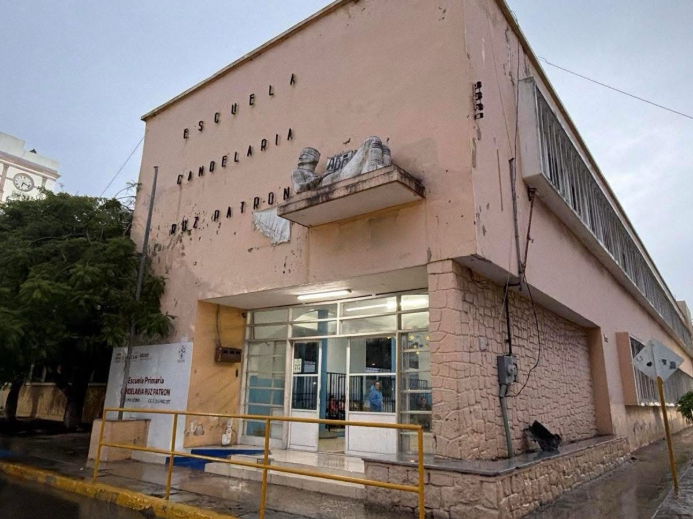
As part of the preventive actions to protect the population, the municipal authorities made available two spaces that will function as temporary shelters if necessary.
One of the shelters is located at the Candelaria Ruz Patrón Elementary School, located on 80th Street between 31st and 33rd, while the second was set up at the Álvaro Obregón Elementary School, located on 83rd Street between 94th and 96th.
The City Council urged citizens to stay tuned to information issued through official channels and to follow the recommendations of Civil Protection, especially given the persistent rains and adverse weather conditions.
Municipal authorities reiterated that the safety and well-being of Progreso families is a priority, and therefore asked residents to take the necessary precautions and go to shelters if they require protection.
In response to the intense and unusual rains currently affecting the municipality, the Progreso City Council deployed a comprehensive citizen support and assistance operation with the aim of protecting the safety and well-being of Progreso families.
As part of the actions implemented, the municipal government enabled special transportation to support people who were unable to board the units destined for the police stations, thus facilitating their safe transfer to their communities.
Municipal authorities also issued a call to fishermen to go to the La Caleta fishing refuge and check the condition of their boats, as some have accumulated water and are at risk of sinking due to the heavy rainfall recorded in recent hours.
To provide shelter to those who require it, the City Council has two temporary shelters available: the Candelaria Ruz Patrón Elementary School, located on 80th Street between 31st and 33rd, and the Álvaro Obregón Elementary School, located on 83rd Street between 94th and 96th.
Similarly, it was reported that an official vehicle remains at the intersection of 96th and 89th streets, providing assistance and support to the affected areas, while municipal personnel continue to visit neighborhoods and communities house by house to provide assistance and, if necessary, transfer families to the designated shelters.
The operation also includes the delivery of food aid to people affected by the rains, as part of the municipal government’s immediate response to the emergency.
The Progreso City Council urged citizens to stay informed through official channels, follow the recommendations of Civil Protection, and take extra precautions while adverse weather conditions prevail, reiterating that the safety and well-being of families is a priority.
Progreso invites residents to join community watch committees like Neighbourhood Watch
They seek to strengthen security and citizen participation in neighborhoods and police stations. May 19, 2026 Progresohoy

PROGRESO.– With the aim of strengthening security and promoting citizen participation, the Progreso City Council, headed by Mayor Erik Rihani González, invited the residents of the municipality to join the Neighborhood Police Committees and form new surveillance and collaboration groups in neighborhoods and precincts.
The strategy is being promoted by the Directorate of Public Safety and Transit (DSPT), headed by Omar de la Cruz Herrera Cocom, in coordination with the Secretariat of Public Security (SSP) of Yucatán, as part of preventive actions focused on improving communication between authorities and citizens.
According to official information, the Neighborhood Police Committees seek to strengthen crime prevention, promote self-care, and facilitate direct contact with security agencies for faster and more organized attention to any risk situation.
As part of these activities, residents participate in informational meetings where they receive guidance on preventive measures, action protocols, and recommendations for reporting incidents that could affect the peace of their communities.
The DSPT reported that people interested in joining an existing committee or creating a new one in their neighborhood can request information through the telephone number 999 548 5284.
Authorities also reminded the public that the number 089 remains available for anonymous reports, while 911 continues to operate for emergency response.
These actions are part of the “Safe Progress” program, a municipal strategy focused on strengthening social proximity, prevention, and community organization as tools to maintain safer environments in the municipality.
Finally, the City Council reiterated its call to Progreso families to work in coordination with the authorities and contribute to preserving safety and order in the port’s neighborhoods and police stations.
Hurricane Preparedness Checklist 2026
June 1 to November 30, 2026
Assemble Important Documents (waterproof container)
Insurance documents personal and property, car, etc.
Medical records for ALL family members, including COVID certifications
Bank account numbers
Resident cards, Driver’s License, I.D.
Proper identification/immunization records for pet
Passports
Pack Personal Essentials
Cash, credit cards, ATM cards (Make photocopies and carry them on your person).
Spare keys/local road map
Cell phone/car charger N.B. Invest in a portable charger and keep it charged!
Clothing/rain gear/sturdy shoes/utility gloves
Blankets/pillows
Toiletries/medications
Eyeglasses, hearing aids
Valuables (jewelry, family pictures)
Pet essentials (muzzle, leash, carrier, food)
Toys/games/books
First aid kit
Prepare Your Home/Property
Secure/store items from yard
Trim loose/dead branches from trees
Secure windows with storm shutters/plywood (pre-drill holes)
Remove satellite dishes/antennae/solar panels,roof turbines, etc.
Move your watercraft to a safe location, if applicable
Have on Hand the following –
Tools (hammer, screwdriver, chainsaw, etc.)
Plastic tarp (roof/window repair)
Clean up supplies/ garbage bags (for yard and home)
Camera/cellphone to document before/after
Buckets and mops
Duct tape for broken windows
Don’t Forget
Fill your vehicle with gas well in advance
Know how to turn off your home’s gas, electricity and water
Prep generator to assure proper operation if you have one
Put a sign in your front window indicating how many people live there and if there is a pet!
Hurricane Shopping List
At least one gallon of water daily per person for 5 to 7 days
Non-perishable packaged or canned food/juices • At least enough for 5 to 7 days
Snack Food • Manual can opener
Cooking utensils/fuels
Paper plates/plastic utensils/trash bags
Two coolers – one for food, one for ice
Personal Supplies
• Moisture wipes/liquid hand sanitizer
• Soap/toothpaste/toothbrush/shampoo/deodorant
• Toilet paper/hygiene items
• Mosquito repellent/sunscreen
• Prescription drugs/necessary medications in a Ziploc bag
• Special items for babies and elderly
Emergency Supplies
Flashlight/batteries
Battery operated TV, radio or NOAA weather radio
Butane lighters/candles/citronella/matches (in waterproof container)
Fire extinguisher
Generator and fuel
First aid kit Pet Care
Supply of food and water
Latex gloves
Partial closure announced on the Mérida-Progreso highway for bridge reconstruction May 18, 2026 Progresohoy
A section of the entrance to Progreso will be closed starting May 25th; drivers are asked to take extreme precautions.
The Ministry of Infrastructure, Communications and Transportation (SICT), in coordination with the State Government, the Progreso City Council and federal agencies, announced the start of rehabilitation and reconstruction work on two bridges located on the Mérida–Progreso federal highway, which will result in significant traffic changes and detours for motorists.
The works will begin on May 25th at the bridge located at kilometer 34.1, on lane A of the highway, that is, in the direction from Mérida to Progreso. The work will last approximately two to three months and will consist of demolishing the upper structure to install new beams, a slab, concrete parapets, and asphalt pavement.
As part of the road operation, vehicular traffic will be completely closed on the section from the Chelem junction to the Progreso port access interchange in the direction of the port.
Authorities reported that only cargo transport destined for the deep-water port will be allowed to pass, and it must enter via the Progreso viaduct or bypass.
To avoid traffic gridlock, two-way traffic will be enabled on lane B of the highway, that is, on the lanes normally used from Progreso towards Mérida. Both vehicles entering and leaving the port will use this section.
Likewise, the SICT recommended that drivers traveling from Mérida to Chicxulub Puerto, San Benito or Telchac use the Conkal–Chicxulub Puerto highway as an alternate route to avoid traffic jams and delays.
The detours and road adjustments will begin to be implemented from Wednesday, May 20 at 9 a.m., with support from the National Guard, the SSP Yucatán and the Municipal Police of Progreso, who will coordinate the traffic and security operation in the area.
Authorities indicated that once the work on section “A” is completed, the reconstruction of the bridge on section “B” will subsequently begin, on a date yet to be determined.
It was also reported that the works will be temporarily suspended from July 15 to August 31 to avoid further disruptions during the summer holiday season.
Finally, authorities urged drivers to respect speed limits, follow traffic signs, and drive with extreme caution due to road modifications that will be in effect during the coming months.
Sheinbaum Visits Yucatan May 16th 2026
Díaz Mena proposes a 1.5 billion loan to rescue Mérida’s water infrastructure
SHEINBAUM SUPPORTS PLAN FOR DRINKING WATER, MOBILITY AND SECURITY IN THE METROPOLITAN AREA
The governor of Yucatán, Joaquín Díaz Mena, announced that his administration would request a loan of 1.5 billion pesos to promote, together with the Federal Government, a comprehensive plan aimed at addressing the problems of urban growth in the metropolitan area of Mérida.
The proposal was presented to the President of Mexico, Claudia Sheinbaum Pardo, during the inauguration of the Kanasín Academic Unit of the Rosario Castellanos National University, where the state governor explained the need to strengthen the drinking water infrastructure, urban mobility and public safety in the face of the accelerated growth of Mérida and its surrounding municipalities.
Díaz Mena explained that the so-called “Renaissance Plan for Mérida” includes a mix of state and federal resources to carry out strategic works that will improve the quality of life for thousands of families in the Yucatecan capital and its metropolitan area.
“I thank you in advance for your support because I am sure that you are sensitive to these problems in the Mérida metropolitan area,” the governor said, addressing the federal president.
After hearing the proposal, Sheinbaum Pardo publicly expressed her support for the project and assured that the Federation would provide support, particularly regarding the supply of drinking water for the city.
“We are going to help the Governor provide water to the city of Mérida,” the president stated during the event.
The head of the state executive branch warned that the current infrastructure is becoming insufficient in the face of the region’s population and urban growth, especially in basic services and mobility.
He explained that the project includes the creation of new water catchment areas, modernization of pumping equipment, repair and expansion of the hydraulic network —which is over 50 years old—, as well as new wastewater treatment plants.
In addition, investments in urban mobility and public safety equipment are planned as part of the comprehensive strategy that seeks to respond to the accelerated development of Mérida and the municipalities that make up its metropolitan area.
Yucatán expands health services with new Yucalpetén Naval General Hospital
President Claudia Sheinbaum Pardo and Governor Joaquín Díaz Mena inaugurated the new Naval General Hospital and led the handover of the old Naval Hospital to the ISSSTE, which will allow for expanded medical care in Progreso.
The Secretary of the Navy, Raymundo Pedro Morales Ángeles, reported that the new hospital has 30 inpatient beds, specialized areas, operating rooms, intensive care, and diagnostic and rehabilitation services.
The new Yucalpetén Naval General Hospital was inaugurated by President Claudia Sheinbaum Pardo and Governor Joaquín Díaz Mena, as part of coordinated efforts between the Mexican government, the State government, and the Secretariat of the Navy to expand healthcare services in Yucatán.
During the event, the transfer of the former Naval Hospital to the Institute for Social Security and Services for State Workers (ISSSTE) was also formalized. This facility will allow for the provision of medical care to ISSSTE beneficiaries and the general public in the municipality of Progreso.
Governor Joaquín Díaz Mena stated that this transfer is part of the efforts to move toward a broader and more accessible healthcare model for Yucatecan families, and he thanked President Sheinbaum Pardo for her support of healthcare projects in the state.
“We said that 2026 would be the Year of Health for Yucatán, and it is coming to fruition. With these actions, we are moving toward a new model of healthcare for the people of Yucatán, with universally free services,” she affirmed.
In her address, Mayor Claudia Sheinbaum Pardo explained that the new Yucalpetén Naval General Hospital will have 30 beds to serve members of the Navy and their families, in recognition of their service to the country.
“They will have access to dignified and efficient healthcare, and of course, with all the naval medical and nursing staff, who are among the best in Mexico, but above all, with new facilities. And the old hospital, the former Naval Hospital, is being transferred to the ISSSTE (Institute for Social Security and Services for State Workers). It has nine beds, and teachers and all state employees will be able to receive care there,” she explained.
As part of this day’s events, Sheinbaum Pardo presided over the signing of the handover agreement for the former Naval Hospital, which will now be managed by the ISSSTE (Institute for Social Security and Services for State Workers) to expand medical care in the region.
Subsequently, accompanied by Governor Joaquín Díaz Mena and naval authorities, she unveiled the commemorative plaque and cut the ribbon inaugurating the new Yucalpetén Naval General Hospital.
In his remarks, the Secretary of the Navy, Raymundo Pedro Morales Ángeles, reported that the new Naval General Hospital has 30 inpatient beds and 18 outpatient beds, operating rooms, intensive care units for adults and children, specialized emergency areas, and 16 medical specialties, in addition to diagnostic and rehabilitation services and medical equipment.
“For years, the former Naval Hospital fulfilled an honorable mission by serving generations of sailors and their dependents. Today, its transfer to the public health system represents the certainty that it will continue saving lives and serving Yucatecan families,” he emphasized.
For his part, the Director General of ISSSTE, Martí Batres Guadarrama, expressed his gratitude for the collaboration between the Office of the President, the Secretariat of the Navy, and the Government of Yucatán, which will allow the Institute to have a new medical unit in Progreso.
Batres Guadarrama reported that the former Naval Hospital will have nine inpatient beds, four consultation rooms, an operating room, and a delivery room. He added that the unit will open its doors to ISSSTE beneficiaries and, through an agreement with the Government of Yucatán, will also provide care to the general public, as part of the process of universalizing health services. Also
participating in the event was the Chief of Staff of the Navy, Admiral Francisco Guillermo Escamilla Cáceres; The commander of the 5th Naval Region, Vice Admiral José Daniel Reséndiz Sandoval; the commander of the 9th Naval Zone, Vice Admiral Héctor Rafael Solís Hernández; the general director of Works and Dredging, Vice Admiral Alejandro López Centeno; the director of the Yucalpetén Naval General Hospital, Commander Gustavo Esquivel Martínez, as well as members of the Navy and their families.
Retirees protest during Claudia Sheinbaum’s visit to Yucatán

MÉRIDA, Yucatán.— The visit of the president of Mexico, Claudia Sheinbaum Pardo, to Yucatán was marked by a protest by retirees from Pemex, CFE and Cenace during the inauguration of CBTis 305 in Ciudad Caucel.
Nearly a hundred former workers demonstrated to demand a review of the reform against so-called “golden pensions,” claiming that it is affecting more than 40,000 retirees who worked for decades in these institutions.
Amid chants and banners, the protesters indicated that they support the elimination of political privileges, but consider it unfair that the reform also reduces the pensions of workers who dedicated 30 or 40 years of service.
During the event, Cecilia Navarro, a retired CFE employee, presented a document to the federal president explaining that some affected individuals have suffered reductions of up to 50 percent in their income, while others face discounts of between 10 and 60 percent.
The protesters requested a review of the retroactive nature of the reform and a distinction between pensions obtained through work experience and those derived from political benefits
Progreso Walk Over the Sea: Dates, Registration and Requirements April 23, 2026
Asipona Progreso is organizing the Walk Over the Sea at the Arcos Pier with prior registration and limited capacity
PROGRESO.- The National Port System Administration (Asipona) Progreso launched the call to participate in the “Walk Over the Sea” , an event that will take place next Saturday, May 2, 2026 at the Arcos Pier of the Port of Progreso.
The activity, which is free to attend but has limited capacity, will take place with an entry time of 3:00 PM to 4:00 PM, while the walk will begin at 4:00 PM and conclude at 5:45 PM.
Registration begins on April 22, 2026According to the announcement, registration will be open from April 22nd to 30th , with a daily limit of 700 people and a total maximum of 6,300 participants .
Recognition given to the work of traditional midwives in southern Yucatán
In Tzucacab, 45 midwives were recognized for their work in maternal health care and supporting women in their communities.
In Tzucacab, 45 traditional midwives from the south of the state were recognized for their work in maternal health care and communwell-being, during a commemorative activity for International Midwives Day.
The activity was organized by the State Government, through the Yucatan Health Secretariat (SSY), to recognize ancestral knowledge and strengthen a more humane, close and intercultural care.
Traditional midwives accompany women during pregnancy, childbirth, and the postpartum period, especially in communities where access to health services may be limited.
Their work responds to a need for attention and preserves knowledge deeply linked to the cultural identity and community organization of the Mayan people.
From the perspective of the administration led by Governor Joaquín Díaz Mena, traditional midwifery is part of a health model that is closer to the people and respectful of community knowledge.
Therefore, in Yucatán, its strengthening is being promoted through training, support and coordination with medical units, to integrate this knowledge with institutional care.
This work makes it possible to link traditional medicine with health services, promote the care of low-risk pregnancies in communities, and ensure timely referral when specialized care is required.
The organization of traditional midwives and their relationship with the state health system is also promoted, in order to consolidate care networks that help reduce access gaps and improve maternal health.
These actions are aligned with the State Development Plan Mayan Renaissance 2024-2030, which prioritizes a preventive, community-based and intercultural health model.
From this perspective, traditional midwives are recognized as agents of care, trust, and cultural continuity, benefiting women, families, and communities in Yucatán.
Temporary shelters opened in Progreso due to heavy rains
Authorities urge the public to stay informed and take precautions.
May 29, 2026 ProgresoHoy
In response to the heavy rains that have fallen in the municipality in recent hours, the Progreso City Council announced the opening of temporary shelters to provide care and protection to people who may require support due to the weather conditions.
As part of the preventive actions to protect the population, the municipal authorities made available two spaces that will function as temporary shelters if necessary.
One of the shelters is located at the Candelaria Ruz Patrón Elementary School, located on 80th Street between 31st and 33rd, while the second was set up at the Álvaro Obregón Elementary School, located on 83rd Street between 94th and 96th.
The City Council urged citizens to stay tuned to information issued through official channels and to follow the recommendations of Civil Protection, especially given the persistent rains and adverse weather conditions.
Municipal authorities reiterated that the safety and well-being of Progreso families is a priority, and therefore asked residents to take the necessary precautions and go to shelters if they require protection.
Progreso City Council deploys extensive citizen support operation in response to heavy rains
May 29, 2026
In response to the intense and unusual rains currently affecting the municipality, the Progreso City Council deployed a comprehensive citizen support and assistance operation with the aim of protecting the safety and well-being of Progreso families.
As part of the actions implemented, the municipal government enabled special transportation to support people who were unable to board the units destined for the police stations, thus facilitating their safe transfer to their communities.
Municipal authorities also issued a call to fishermen to go to the La Caleta fishing refuge and check the condition of their boats, as some have accumulated water and are at risk of sinking due to the heavy rainfall recorded in recent hours.
To provide shelter to those who require it, the City Council has two temporary shelters available: the Candelaria Ruz Patrón Elementary School, located on 80th Street between 31st and 33rd, and the Álvaro Obregón Elementary School, located on 83rd Street between 94th and 96th.
Similarly, it was reported that an official vehicle remains at the intersection of 96th and 89th streets, providing assistance and support to the affected areas, while municipal personnel continue to visit neighborhoods and communities house by house to provide assistance and, if necessary, transfer families to the designated shelters.
The operation also includes the delivery of food aid to people affected by the rains, as part of the municipal government’s immediate response to the emergency.
The Progreso City Council urged citizens to stay informed through official channels, follow the recommendations of Civil Protection, and take extra precautions while adverse weather conditions prevail, reiterating that the safety and well-being of families is a priority.
Progreso invites residents to join community watch committees like Neighbourhood
They seek to strengthen security and citizen participation in neighborhoods and police stations. Published May 19, 2026 Progress Today
PROGRESO.– With the aim of strengthening security and promoting citizen participation, the Progreso City Council, headed by Mayor Erik Rihani González, invited the residents of the municipality to join the Neighborhood Police Committees and form new surveillance and collaboration groups in neighborhoods and precincts.
The strategy is being promoted by the Directorate of Public Safety and Transit (DSPT), headed by Omar de la Cruz Herrera Cocom, in coordination with the Secretariat of Public Security (SSP) of Yucatán, as part of preventive actions focused on improving communication between authorities and citizens.
According to official information, the Neighborhood Police Committees seek to strengthen crime prevention, promote self-care, and facilitate direct contact with security agencies for faster and more organized attention to any risk situation.
As part of these activities, residents participate in informational meetings where they receive guidance on preventive measures, action protocols, and recommendations for reporting incidents that could affect the peace of their communities.
The DSPT reported that people interested in joining an existing committee or creating a new one in their neighborhood can request information through the telephone number 999 548 5284.
Authorities also reminded the public that the number 089 remains available for anonymous reports, while 911 continues to operate for emergency response.
These actions are part of the “Safe Progress” program, a municipal strategy focused on strengthening social proximity, prevention, and community organization as tools to maintain safer environments in the municipality.
Finally, the City Council reiterated its call to Progreso families to work in coordination with the authorities and contribute to preserving safety and order in the port’s neighborhoods and police stations.
Hurricane Preparedness Checklist 2026
June 1 to November 30, 2026
Assemble Important Documents (waterproof container)
Insurance documents personal and property, car, etc.
Medical records for ALL family members, including COVID certifications
Bank account numbers
Resident cards, Driver’s License, I.D.
Proper identification/immunization records for pet
Passports
Pack Personal Essentials
Cash, credit cards, ATM cards (Make photocopies and carry them on your person).
Spare keys/local road map
Cell phone/car charger N.B. Invest in a portable charger and keep it charged!
Clothing/rain gear/sturdy shoes/utility gloves
Blankets/pillows
Toiletries/medications
Eyeglasses, hearing aids
Valuables (jewelry, family pictures)
Pet essentials (muzzle, leash, carrier, food)
Toys/games/books
First aid kit
Prepare Your Home/Property
Secure/store items from yard
Trim loose/dead branches from trees
Secure windows with storm shutters/plywood (pre-drill holes)
Remove satellite dishes/antennae/solar panels,roof turbines, etc.
Move your watercraft to a safe location, if applicable
Have on Hand the following –
Tools (hammer, screwdriver, chainsaw, etc.)
Plastic tarp (roof/window repair)
Clean up supplies/ garbage bags (for yard and home)
Camera/cellphone to document before/after
Buckets and mops
Duct tape for broken windows
Don’t Forget
Fill your vehicle with gas well in advance
Know how to turn off your home’s gas, electricity and water
Prep generator to assure proper operation if you have one
Put a sign in your front window indicating how many people live there and if there is a pet!
Hurricane Shopping List
At least one gallon of water daily per person for 5 to 7 days
Non-perishable packaged or canned food/juices • At least enough for 5 to 7 days
Snack Food • Manual can opener
Cooking utensils/fuels
Paper plates/plastic utensils/trash bags
Two coolers – one for food, one for ice
Personal Supplies
• Moisture wipes/liquid hand sanitizer
• Soap/toothpaste/toothbrush/shampoo/deodorant
• Toilet paper/hygiene items
• Mosquito repellent/sunscreen
• Prescription drugs/necessary medications in a Ziploc bag
• Special items for babies and elderly
Emergency Supplies
Flashlight/batteries
Battery operated TV, radio or NOAA weather radio
Butane lighters/candles/citronella/matches (in waterproof container)
Fire extinguisher
Generator and fuel
First aid kit Pet Care
Supply of food and water
Latex gloves
Partial closure announced on the Mérida-Progreso highway for bridge reconstruction May 18, 2026 Progresohoy
A section of the entrance to Progreso will be closed starting May 25th; drivers are asked to take extreme precautions.
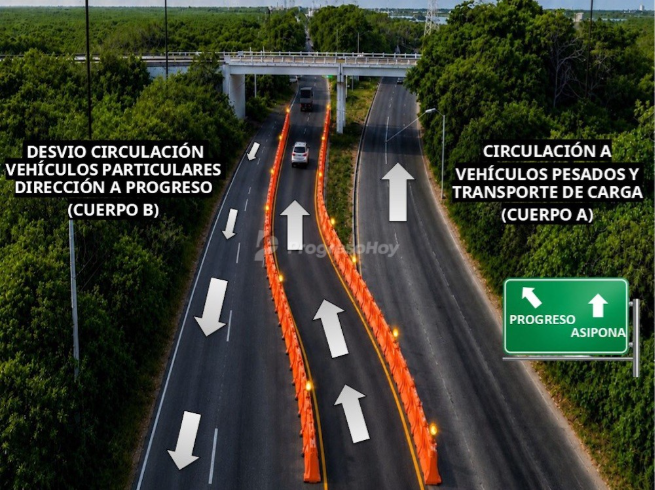
The Ministry of Infrastructure, Communications and Transportation (SICT), in coordination with the State Government, the Progreso City Council and federal agencies, announced the start of rehabilitation and reconstruction work on two bridges located on the Mérida–Progreso federal highway, which will result in significant traffic changes and detours for motorists.
The works will begin on May 25th at the bridge located at kilometer 34.1, on lane A of the highway, that is, in the direction from Mérida to Progreso. The work will last approximately two to three months and will consist of demolishing the upper structure to install new beams, a slab, concrete parapets, and asphalt pavement.
As part of the road operation, vehicular traffic will be completely closed on the section from the Chelem junction to the Progreso port access interchange in the direction of the port.
Authorities reported that only cargo transport destined for the deep-water port will be allowed to pass, and it must enter via the Progreso viaduct or bypass.
To avoid traffic gridlock, two-way traffic will be enabled on lane B of the highway, that is, on the lanes normally used from Progreso towards Mérida. Both vehicles entering and leaving the port will use this section.
Likewise, the SICT recommended that drivers traveling from Mérida to Chicxulub Puerto, San Benito or Telchac use the Conkal–Chicxulub Puerto highway as an alternate route to avoid traffic jams and delays.
The detours and road adjustments will begin to be implemented from Wednesday, May 20 at 9 a.m., with support from the National Guard, the SSP Yucatán and the Municipal Police of Progreso, who will coordinate the traffic and security operation in the area.
Authorities indicated that once the work on section “A” is completed, the reconstruction of the bridge on section “B” will subsequently begin, on a date yet to be determined.
It was also reported that the works will be temporarily suspended from July 15 to August 31 to avoid further disruptions during the summer holiday season.
Finally, authorities urged drivers to respect speed limits, follow traffic signs, and drive with extreme caution due to road modifications that will be in effect during the coming months.
Sheinbaum Visits Yucatan May 16th 2026
Díaz Mena proposes a 1.5 billion loan to rescue Mérida’s water infrastructure
SHEINBAUM SUPPORTS PLAN FOR DRINKING WATER, MOBILITY AND SECURITY IN THE METROPOLITAN AREA
The governor of Yucatán, Joaquín Díaz Mena, announced that his administration would request a loan of 1.5 billion pesos to promote, together with the Federal Government, a comprehensive plan aimed at addressing the problems of urban growth in the metropolitan area of Mérida.
The proposal was presented to the President of Mexico, Claudia Sheinbaum Pardo, during the inauguration of the Kanasín Academic Unit of the Rosario Castellanos National University, where the state governor explained the need to strengthen the drinking water infrastructure, urban mobility and public safety in the face of the accelerated growth of Mérida and its surrounding municipalities.
Díaz Mena explained that the so-called “Renaissance Plan for Mérida” includes a mix of state and federal resources to carry out strategic works that will improve the quality of life for thousands of families in the Yucatecan capital and its metropolitan area.
“I thank you in advance for your support because I am sure that you are sensitive to these problems in the Mérida metropolitan area,” the governor said, addressing the federal president.
After hearing the proposal, Sheinbaum Pardo publicly expressed her support for the project and assured that the Federation would provide support, particularly regarding the supply of drinking water for the city.
“We are going to help the Governor provide water to the city of Mérida,” the president stated during the event.
The head of the state executive branch warned that the current infrastructure is becoming insufficient in the face of the region’s population and urban growth, especially in basic services and mobility.
He explained that the project includes the creation of new water catchment areas, modernization of pumping equipment, repair and expansion of the hydraulic network —which is over 50 years old—, as well as new wastewater treatment plants.
In addition, investments in urban mobility and public safety equipment are planned as part of the comprehensive strategy that seeks to respond to the accelerated development of Mérida and the municipalities that make up its metropolitan area.
Yucatán expands health services with new Yucalpetén Naval General Hospital
President Claudia Sheinbaum Pardo and Governor Joaquín Díaz Mena inaugurated the new Naval General Hospital and led the handover of the old Naval Hospital to the ISSSTE, which will allow for expanded medical care in Progreso.
The Secretary of the Navy, Raymundo Pedro Morales Ángeles, reported that the new hospital has 30 inpatient beds, specialized areas, operating rooms, intensive care, and diagnostic and rehabilitation services.
The new Yucalpetén Naval General Hospital was inaugurated by President Claudia Sheinbaum Pardo and Governor Joaquín Díaz Mena, as part of coordinated efforts between the Mexican government, the State government, and the Secretariat of the Navy to expand healthcare services in Yucatán.
During the event, the transfer of the former Naval Hospital to the Institute for Social Security and Services for State Workers (ISSSTE) was also formalized. This facility will allow for the provision of medical care to ISSSTE beneficiaries and the general public in the municipality of Progreso.
Governor Joaquín Díaz Mena stated that this transfer is part of the efforts to move toward a broader and more accessible healthcare model for Yucatecan families, and he thanked President Sheinbaum Pardo for her support of healthcare projects in the state.
“We said that 2026 would be the Year of Health for Yucatán, and it is coming to fruition. With these actions, we are moving toward a new model of healthcare for the people of Yucatán, with universally free services,” she affirmed.
In her address, Mayor Claudia Sheinbaum Pardo explained that the new Yucalpetén Naval General Hospital will have 30 beds to serve members of the Navy and their families, in recognition of their service to the country.
“They will have access to dignified and efficient healthcare, and of course, with all the naval medical and nursing staff, who are among the best in Mexico, but above all, with new facilities. And the old hospital, the former Naval Hospital, is being transferred to the ISSSTE (Institute for Social Security and Services for State Workers). It has nine beds, and teachers and all state employees will be able to receive care there,” she explained.
As part of this day’s events, Sheinbaum Pardo presided over the signing of the handover agreement for the former Naval Hospital, which will now be managed by the ISSSTE (Institute for Social Security and Services for State Workers) to expand medical care in the region.
Subsequently, accompanied by Governor Joaquín Díaz Mena and naval authorities, she unveiled the commemorative plaque and cut the ribbon inaugurating the new Yucalpetén Naval General Hospital.
In his remarks, the Secretary of the Navy, Raymundo Pedro Morales Ángeles, reported that the new Naval General Hospital has 30 inpatient beds and 18 outpatient beds, operating rooms, intensive care units for adults and children, specialized emergency areas, and 16 medical specialties, in addition to diagnostic and rehabilitation services and medical equipment.
“For years, the former Naval Hospital fulfilled an honorable mission by serving generations of sailors and their dependents. Today, its transfer to the public health system represents the certainty that it will continue saving lives and serving Yucatecan families,” he emphasized.
For his part, the Director General of ISSSTE, Martí Batres Guadarrama, expressed his gratitude for the collaboration between the Office of the President, the Secretariat of the Navy, and the Government of Yucatán, which will allow the Institute to have a new medical unit in Progreso.
Batres Guadarrama reported that the former Naval Hospital will have nine inpatient beds, four consultation rooms, an operating room, and a delivery room. He added that the unit will open its doors to ISSSTE beneficiaries and, through an agreement with the Government of Yucatán, will also provide care to the general public, as part of the process of universalizing health services. Also
participating in the event was the Chief of Staff of the Navy, Admiral Francisco Guillermo Escamilla Cáceres; The commander of the 5th Naval Region, Vice Admiral José Daniel Reséndiz Sandoval; the commander of the 9th Naval Zone, Vice Admiral Héctor Rafael Solís Hernández; the general director of Works and Dredging, Vice Admiral Alejandro López Centeno; the director of the Yucalpetén Naval General Hospital, Commander Gustavo Esquivel Martínez, as well as members of the Navy and their families.
Retirees protest during Claudia Sheinbaum’s visit to Yucatán
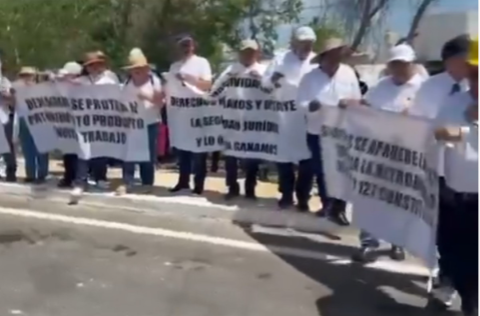
MÉRIDA, Yucatán.— The visit of the president of Mexico, Claudia Sheinbaum Pardo, to Yucatán was marked by a protest by retirees from Pemex, CFE and Cenace during the inauguration of CBTis 305 in Ciudad Caucel.
Nearly a hundred former workers demonstrated to demand a review of the reform against so-called “golden pensions,” claiming that it is affecting more than 40,000 retirees who worked for decades in these institutions.
Amid chants and banners, the protesters indicated that they support the elimination of political privileges, but consider it unfair that the reform also reduces the pensions of workers who dedicated 30 or 40 years of service.
During the event, Cecilia Navarro, a retired CFE employee, presented a document to the federal president explaining that some affected individuals have suffered reductions of up to 50 percent in their income, while others face discounts of between 10 and 60 percent.
The protesters requested a review of the retroactive nature of the reform and a distinction between pensions obtained through work experience and those derived from political benefits
Progreso Walk Over the Sea: Dates, Registration and Requirements Abraham Ismael Raz HerreraApril 23, 2026
Asipona Progreso is organizing the Walk Over the Sea at the Arcos Pier with prior registration and limited capacity
PROGRESO.- The National Port System Administration (Asipona) Progreso launched the call to participate in the “Walk Over the Sea” , an event that will take place next Saturday, May 2, 2026 at the Arcos Pier of the Port of Progreso.
The activity, which is free to attend but has limited capacity, will take place with an entry time of 3:00 PM to 4:00 PM, while the walk will begin at 4:00 PM and conclude at 5:45 PM.
Registration begins on April 22, 2026
According to the announcement, registration will be open from April 22nd to 30th , with a daily limit of 700 people and a total maximum of 6,300 participants . To register, go to https://aplicativo.puertosyucatan.com/sistema_eventos/public/
Recognition given to the work of traditional midwives in southern Yucatán
In Tzucacab, 45 midwives were recognized for their work in maternal health care and supporting women in their communities.
In Tzucacab, 45 traditional midwives from the south of the state were recognized for their work in maternal health care and communwell-being, during a commemorative activity for International Midwives Day.
The activity was organized by the State Government, through the Yucatan Health Secretariat (SSY), to recognize ancestral knowledge and strengthen a more humane, close and intercultural care.
Traditional midwives accompany women during pregnancy, childbirth, and the postpartum period, especially in communities where access to health services may be limited.
Their work responds to a need for attention and preserves knowledge deeply linked to the cultural identity and community organization of the Mayan people.
From the perspective of the administration led by Governor Joaquín Díaz Mena, traditional midwifery is part of a health model that is closer to the people and respectful of community knowledge.
Therefore, in Yucatán, its strengthening is being promoted through training, support and coordination with medical units, to integrate this knowledge with institutional care.
This work makes it possible to link traditional medicine with health services, promote the care of low-risk pregnancies in communities, and ensure timely referral when specialized care is required.
The organization of traditional midwives and their relationship with the state health system is also promoted, in order to consolidate care networks that help reduce access gaps and improve maternal health.
These actions are aligned with the State Development Plan Mayan Renaissance 2024-2030, which prioritizes a preventive, community-based and intercultural health model.
From this perspective, traditional midwives are recognized as agents of care, trust, and cultural continuity, benefiting women, families, and communities in Yucatán.
Recent Comments